Photography Priya Sharma
Capturing the Perfect Taj Mahal Photo
Priya Sharma11/20/2024
8 min read
Taj MahalIndiaPhotographyTravel Tips
# Capturing the Perfect Taj Mahal Photo
The Taj Mahal is one of the most photographed buildings in the world, yet capturing its true beauty remains a challenge. Here's how professionals get those stunning shots.
## Golden Hour Magic
The best light occurs during two windows:
### Sunrise (6:30-8:00 AM)
- Soft, warm light illuminates the white marble
- Fewer crowds in your shots
- Cooler temperatures for comfortable shooting
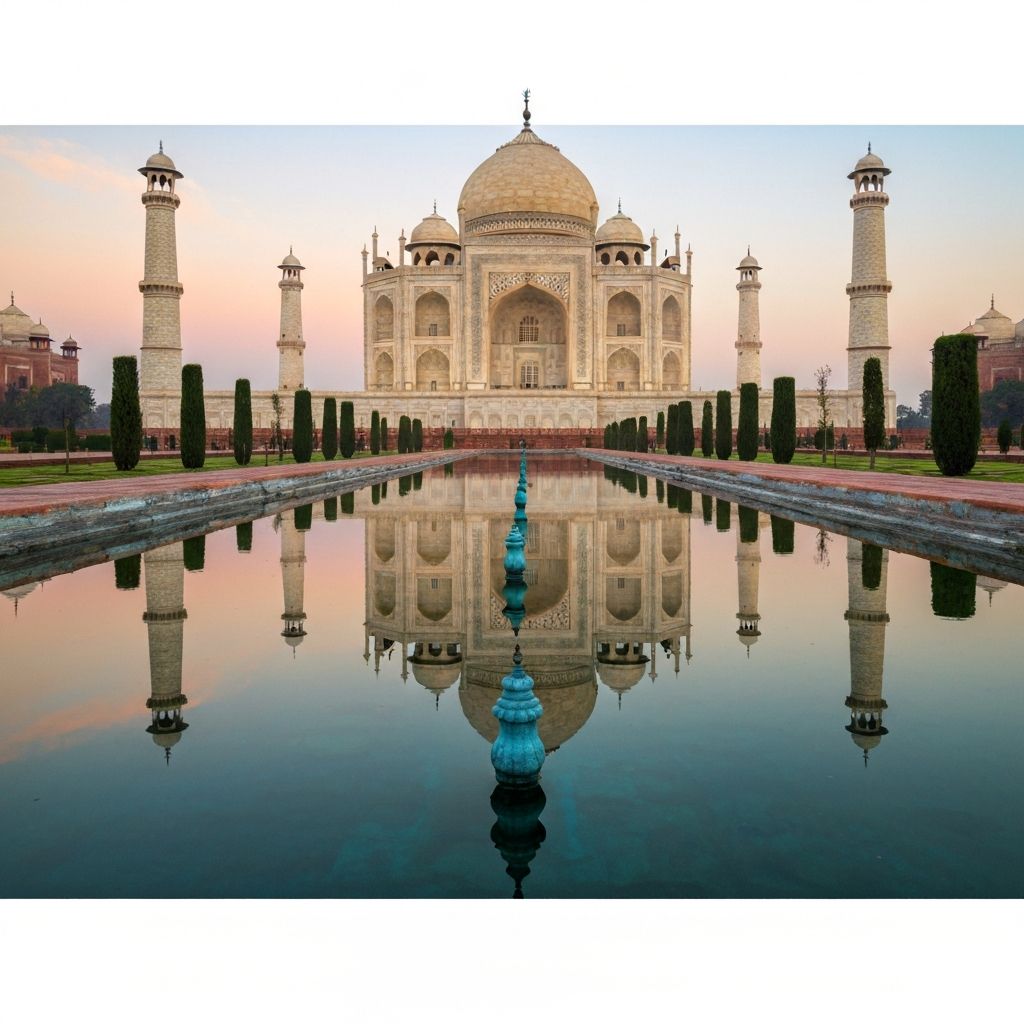
- The monument glows with pink and orange hues
### Sunset (5:30-7:00 PM)
- Golden light from the west creates dramatic shadows
- The marble takes on amber tones
- Reflections in the water are stronger
- More crowded but worth it
## Best Viewpoints
### Classic Front View
The reflection pool shot is iconic for a reason. Arrive early to capture it without crowds. Use a wide-angle lens (16-35mm) to get the entire structure and reflection.
### Side Angles
The Taj Mahal's symmetry makes it photogenic from any angle. Walk around to find unique perspectives. The side views show the minarets against the sky.
### Mehtab Bagh (Moonlight Garden)
Across the Yamuna River, this garden offers stunning sunset views. Less crowded and provides unique angles without the crowds.
### Inside the Mosque
The western mosque's doorway frames the Taj perfectly. Arrive early as this spot fills quickly.
## Technical Settings
### For Bright Days
- ISO: 100-200
- Aperture: f/8-f/11 for sharpness throughout
- Shutter speed: 1/250 or faster
- Use polarizing filter to enhance sky and reduce glare on marble
### For Low Light
- ISO: 400-800
- Aperture: f/2.8-f/5.6
- Shutter speed: depends on available light
- Tripod essential for sharp images
## Composition Tips
**Rule of Thirds**
Don't always center the Taj Mahal. Place it off-center with interesting foreground elements.
**Leading Lines**
Use the pathways, water channels, and trees to draw the eye toward the monument.
**Include People**
Silhouettes of visitors provide scale and story. Wait for interesting moments.
**Details Matter**
Don't just photograph the building. Capture the intricate marble inlay work, calligraphy, and decorative elements.
## Avoiding Common Mistakes
1. **Don't Forget the Ticket**
Cameras are allowed, but professional equipment may require special permits.
2. **Protect Your Gear**
Agra is dusty. Keep lens cloths handy and use protective filters.
3. **Mind the Restrictions**
Tripods are sometimes restricted. Monopods are usually acceptable.
4. **Respect the Space**
This is a mausoleum. Be respectful when shooting and of other visitors.
## The Full Moon Experience
Once a month (except Friday and during Ramadan), the Taj Mahal opens for night viewing under the full moon. Limited tickets (400 per night) must be booked well in advance. The experience is surreal—the white marble glows silvery in moonlight.
## Post-Processing Tips
**White Balance**
The marble's color shifts throughout the day. Shoot in RAW for flexibility in post-processing.
**Exposure**
The bright white marble often tricks camera meters. Slightly underexpose (1/3 to 2/3 stop) to preserve detail.
**Perspective Correction**
Use lens correction tools to fix converging lines, especially with wide-angle shots.
## Beyond the Famous Shot
Everyone has seen photos of the Taj Mahal. Make yours unique:
- Photograph reflections in puddles after rain
- Capture the changing colors from sunrise to sunset in a time-lapse series
- Focus on architectural details tourists ignore
- Include the surrounding structures and gardens
- Shoot through archways and frames
## The Ultimate Goal
Remember: the best photo isn't necessarily the most technically perfect. It's the one that captures how the Taj Mahal made you feel—the awe, the romance, the wonder of standing before one of humanity's greatest architectural achievements.
Take the famous shot for your album, then put the camera down for a few minutes. Experience the Taj Mahal with your eyes, not just through a viewfinder. Some moments are meant to be felt, not just photographed.